
When Sylvia Bochmann attends a mountain parade, she now looks at the people wearing traditional dress with completely different eyes. She has taken the measurements of many of them so that she could tailor the festive garments to fit them perfectly. Whether it’s mining trousers or mountain smocks, everything is made in her studio in Langenbach.
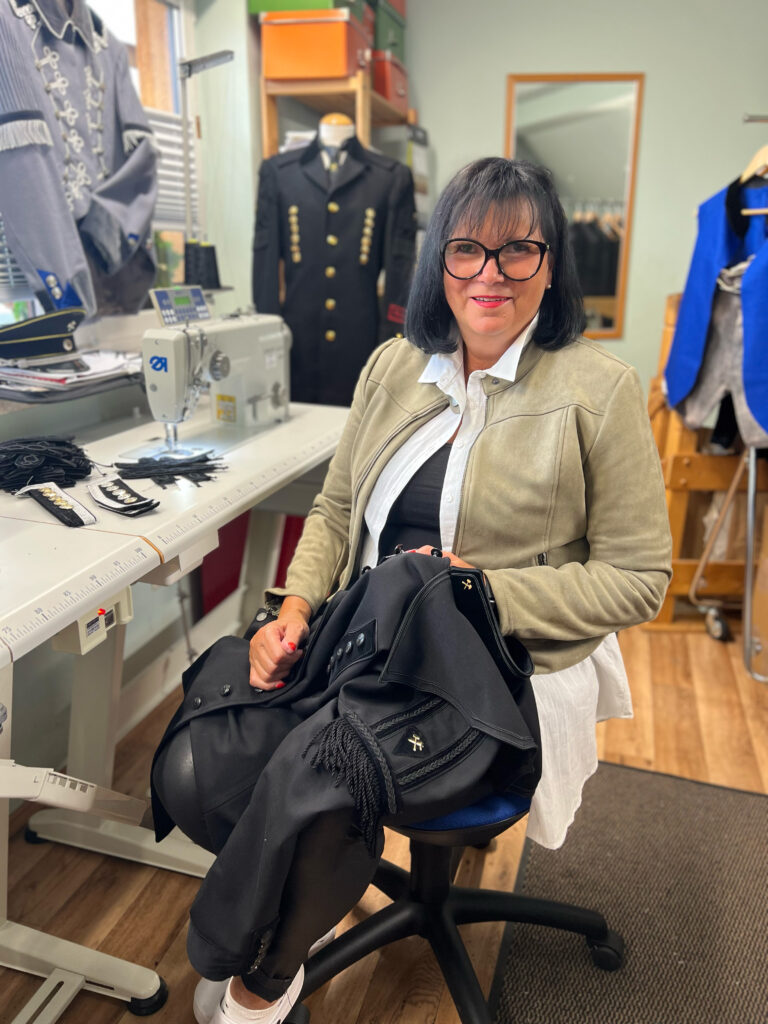
Actually, she wasn’t interested in training as an industrial seamstress at first. But over time, her interest in making clothes grew, so that young Sylvia Bochmann trained as a bespoke seamstress while still living in the GDR. ‘It was difficult because at that time it was politically undesirable for craftspeople to become self-employed,’ she explains. With the fall of the Berlin Wall, she initially buried her dream of opening her own tailor shop because clothing was now available to buy in abundance.

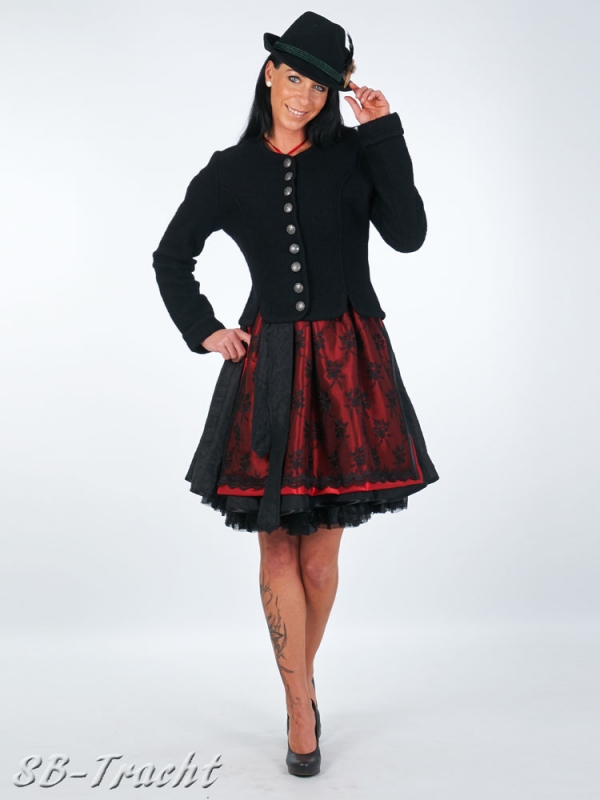
After earning her living as a commercial clerk, Sylvia Bochmann finally realised her dream of opening her own tailor shop in 1999. She started out designing her own dirndl dresses. Her designs were well received at the trade fair in Salzburg, and at peak times she needed up to nine seamstresses to help her fulfil all her orders.
‘Each association has different details on their festive costumes, which are sewn according to historical models.’
Sylvia Bochmann, tailor
When the previous tailor for the Schneeberg Mountain Brotherhood retired, Sylvia Bochmann was asked if she could take over the orders. This is because the habits are not available to buy off the peg anywhere.
She now tailors the often elaborately decorated clothing for many members of the Saxon Association of Miners’, Smelters’ and Miners’ Associations.
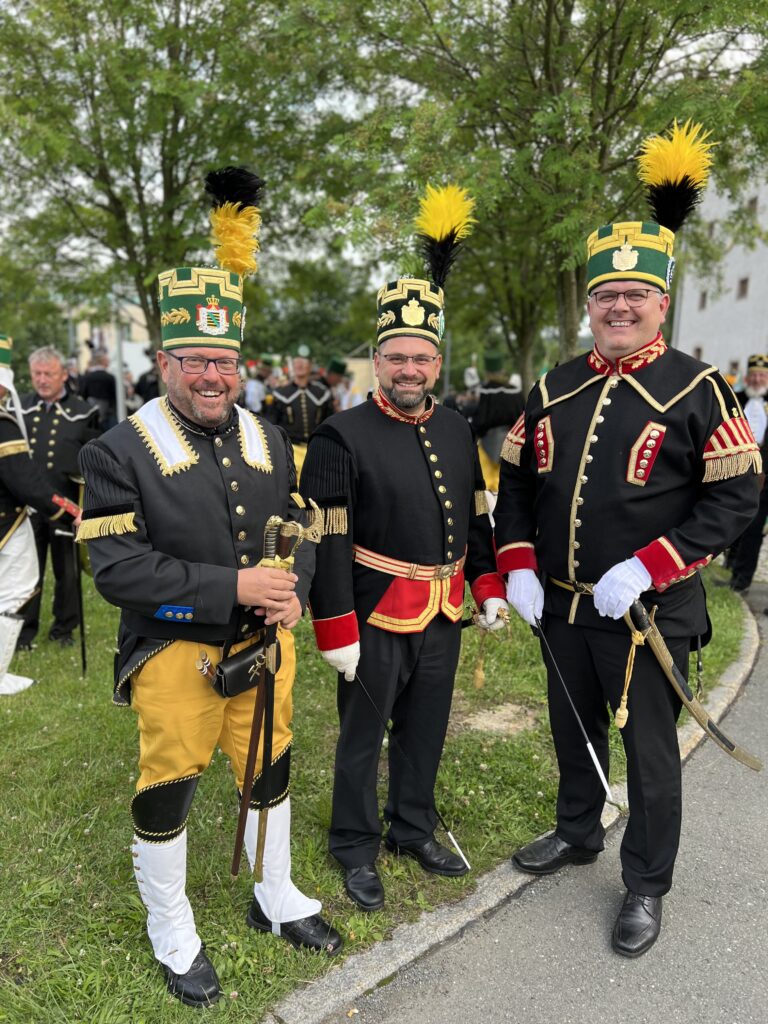
But it’s not just Saxon miners and miners’ musicians who are filling their order books. Word of her talent and quality has now spread as far as Trier. However, she doesn’t have as much creative freedom with a habit as she does with a dirndl: “With a dirndl, you can be creative and play around with colours and shapes. But for traditional habits, there are strict regulations from the Saxon State Association; I had to attend a lecture first.”
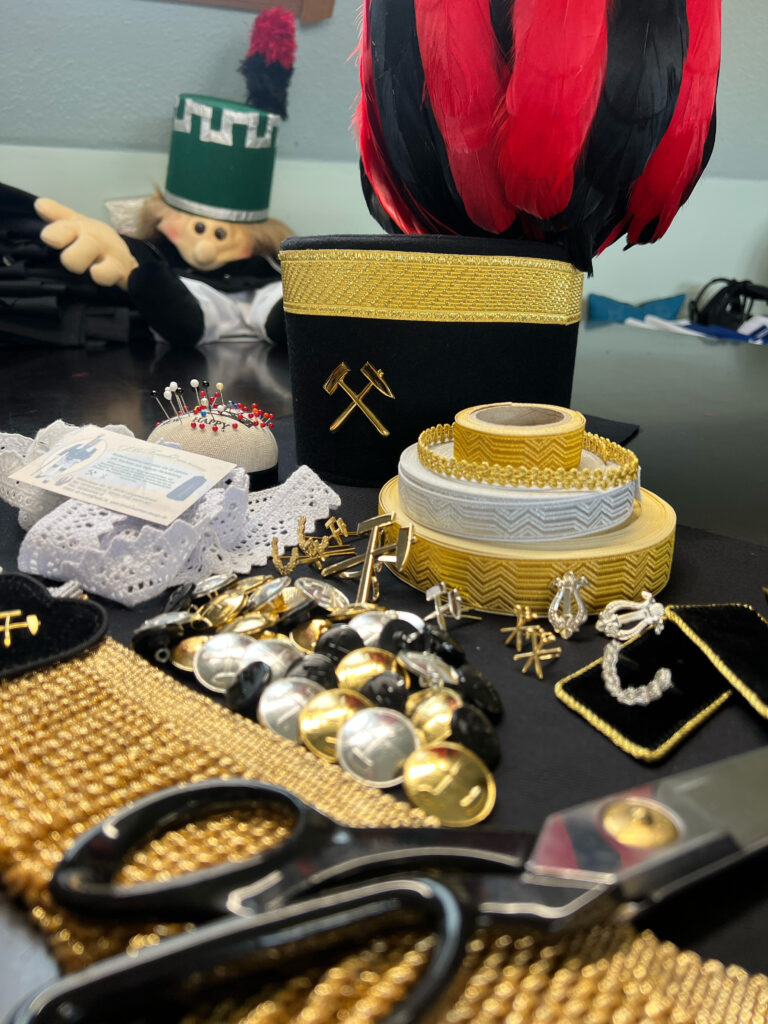
Not all details can be attached with a sewing machine. Often, real handiwork is required. Some smocks are trimmed with lace, others have a cape, i.e. an additional shoulder cape. There are countless details that differ from club to club. But they all have one thing in common: their buttons bear the typical mining symbol, i.e. a hammer and iron. She has now found a supplier for these in the Upper Palatinate who also meets the strict quality criteria.
